
Let’s get something clear right from the start:
Empires fall.
They always have. They always will.
They fall not just because they’re corrupt, but because corruption makes them hollow from the inside out. Because eventually, the weight of greed and violence collapses the whole thing under its own swollen self-importance.
Ask Pharaoh. Ask Caesar. Ask Bull Connor.
Empires fall.
But here’s the real question:

What survives?
What grows up through the cracks?
What roots itself deeper than power?
What refuses to be burned down?
Love.
Not soft, sentimental love. Not greeting card love. But truth-telling, risk-taking, table-setting, grief-honoring, justice-seeking love.
That’s what endures.
I don’t say this lightly. These days, the empire seems louder than ever. Louder and crueler and increasingly uninterested in even pretending it’s not. You’ve seen it. You feel it in your body.
They’re rewriting history.
Criminalizing compassion.
Turning schools and libraries into battlefields.
Twisting Christianity into a flag-draped idol.
Censoring books, banning healthcare, mocking the poor.
Flaunting Project 2025 like a manifesto for the next regime.
And meanwhile, people of good conscience are exhausted. Or numb. Or afraid that resistance is futile.
So let me say it again for the ones in the back:
Empires fall.
But love—real love—does not.
This isn’t just a political truth. It’s a theological one. Scripture is full of empires—and full of people who dared to dream beyond them.
- Pharaoh enslaved the Israelites, but he couldn’t stop Moses from saying, “Let my people go.”
- Babylon flattened Jerusalem, but it couldn’t silence the prophets or extinguish hope.
- Rome crucified Jesus, but three days later, empire found itself outmatched by resurrection.
The Bible is not the story of powerful people succeeding. It’s the story of ordinary people surviving. Of God showing up not in the palace, but in the wilderness. Not on the throne, but on the cross. Not with armies, but with a handful of terrified disciples, somehow still carrying the flame.
Here’s the flame I’m carrying right now:
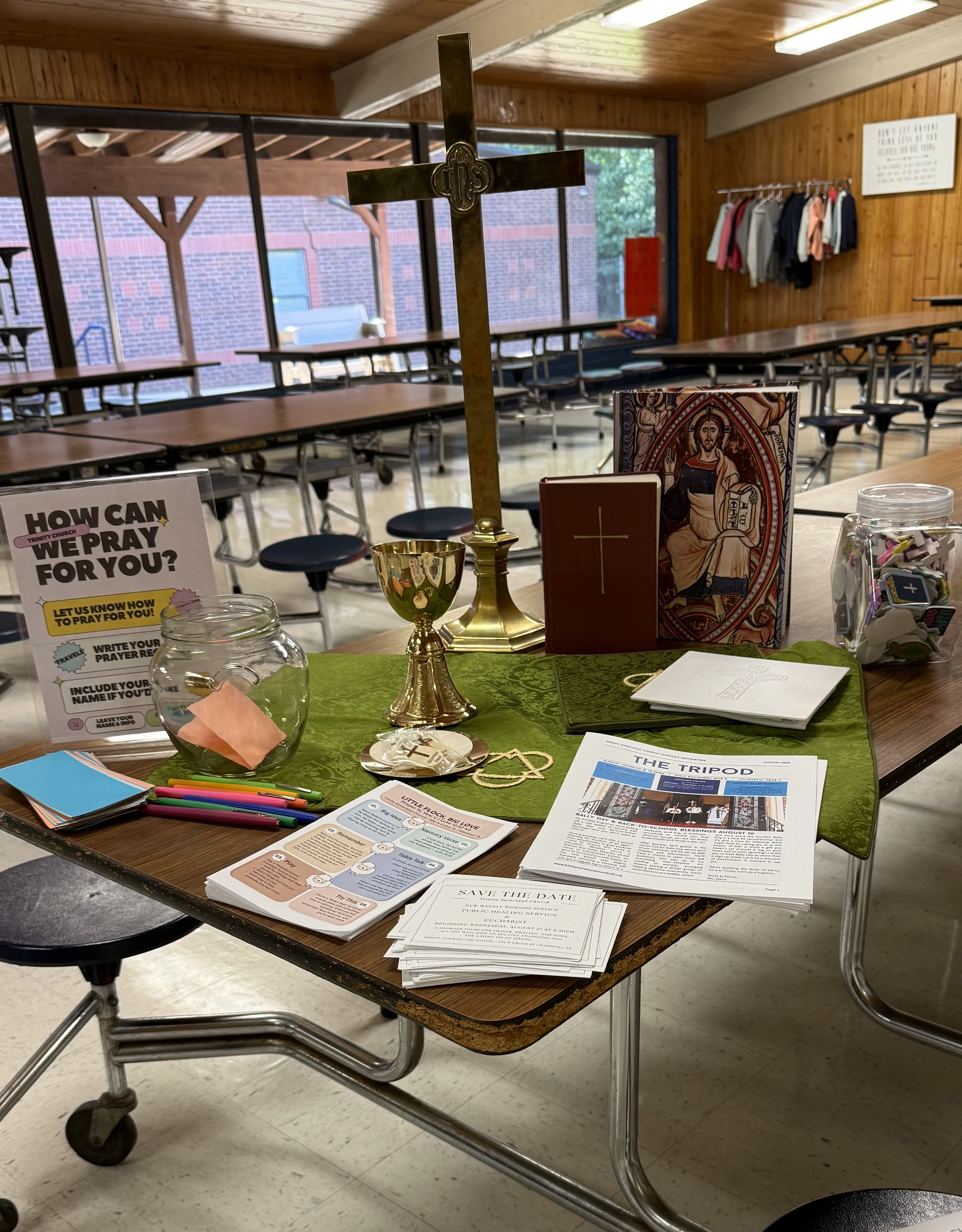
Part of my job is to serve as chaplain at Trinity Episcopal School. At Meet the Teacher Night this past week, I set up a mini altar in the cafeteria. I brought a pack of unconsecrated priest hosts and a little grape juice, thinking maybe a few kids would be curious. Complete with a chalice, purificator, and linens, I stood and greeted families as they came in.
What I didn’t expect was the joy. The tiny hands breaking the bread, dipping it in the cup like it was the most natural thing in the world. The questions they asked. The way they lingered. The way they laughed.
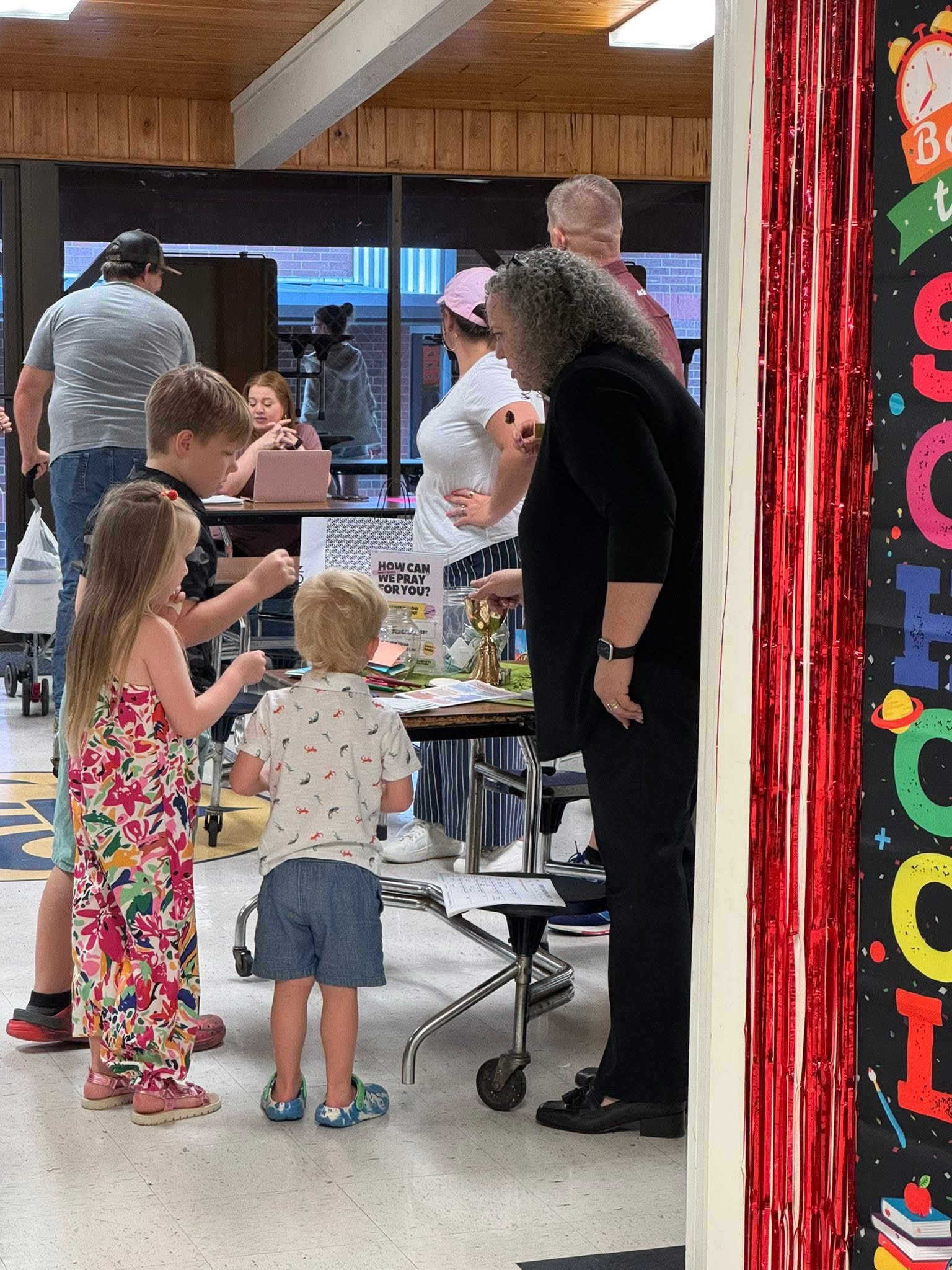
One little boy whispered, “I don’t usually get to have communion because my mom says no wine.” I got to say, “We’re using grape juice this year—so maybe you can.”
A mom walked up, watching her kids with interest. Then she looked at me and asked, “Can I try, too?” She broke the host, dipped it in the juice, and as she received—her face softened. Her eyes closed. She’d never had communion before. Neither had her children.
And yes, I know—this wasn’t a consecrated Eucharist. But I also know this:
God is not confined to our rituals.
Christ shows up where he always has—on the margins, in the questions, in the ordinary things we break and share. That table held more real presence than some sanctuaries I’ve stood in.
So if you’re scared, I understand. If you’re tired, I am too.
But don’t mistake the volume of empire for the voice of God.
God is still whispering from the margins. Still marching with the outcast. Still setting tables in the wilderness and saying,
“Do this in remembrance of me.”
The story’s not over.
Empires fall.
Love does not.
~ Dana+
 Invisible Leftovers